

I regularly come into contact with companies whose energy bills are strongly influenced by peak consumption. These short but powerful peaks, when energy consumption suddenly increases sharply, lead to considerably higher energy costs. n. In this blog post, I’d like to give you more insight into peak consumption and what you can do about it.
What is peak consumption?
Since the introduction of the capacity tariff in 2023, the network tariffs on your electricity bill no longer depend only on the amount of electricity your company consumes, but also on how much electricity you consume at the same time. So by “peak consumption” we mean the highest moments of energy consumption within a given period.
Since the introduction of this capacity tariff, the grid bill is calculated in part based on your highest quarter peak per month. So one peak can affect the energy cost of the whole month.
Some causes are:
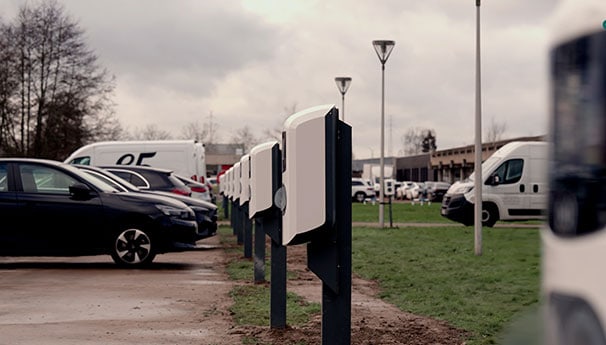
- Charging electric fleet at end of workday
- Production peak at fixed times (startup of several machines simultaneously)
- Industrial installations (motors, compressors)
- Refrigeration or freezing infrastructure
- Large HVAC systems
Why is peak consumption problematic for your business?
Because energy prices are often tied to the highest moment of consumption, a single spike can pull up your company’s entire monthly bill.
- Higher energy bill: Grid operators and suppliers charge extra for high peaks.
- Grid imbalance: Large peaks strain grid capacity.
- Inefficient use of energy: Appliances often do not run optimally during peak times.

How PowerBee helps reduce peak consumption in your SME
Through smart monitoring and control, our team makes your consumption visible and manageable by:
- Real-time insight: Optimization of consumption occurs through continuous monitoring. You see exactly when peaks occur and can respond accordingly.
- Load Shifting: Spread energy-intensive activities by starting up machines or production lines in phases. Consumption is automatically shifted and spread to cheaper off-peak hours.
- Smart control via EMS: Machines, load points, HVAC systems and other large consumers are tuned to avoid peaks. Also through automation, your consumption is distributed and peaks are automatically avoided.
- Integration with battery storage (BESS): Batteries charge during off-peak moments or overproduction. They discharge at smart times to stagger or even temporarily avoid grid consumption.
Did you know: combined with subsidies and tax breaks, you can recoup your investment in battery storage within 4 to 7 years!

Conclusion
Peak consumption can imperceptibly cause a large additional cost on your company’s energy bill. With smart monitoring and practical applications from PowerBee, you can get a grip on that consumption, reduce energy costs and contribute to a more stable and sustainable electricity grid.